Which is a benefit of collaboration and teamwork?
Working with others can feel slower and more complex than working alone, yet collaboration continues to play a key role in learning and work. In this article, we take a closer look at the real benefits of teamwork and why it often leads to better results.


Tell our team about your needs and we will customize the tool as part of your chosen package!
Working with others can feel slower and more complex than working alone, yet collaboration continues to play a key role in learning and work. In this article, we take a closer look at the real benefits of teamwork and why it often leads to better results.
What you'll learn
- Why collaboration leads to better decisions by combining diverse perspectives and solving complex problems more effectively.
- How communication and shared understanding boost productivity and keep teams aligned on goals.
- What teamwork does for morale and engagement, and why people feel more satisfied when they contribute and learn together.
- Practical ways to spot healthy collaboration in your own team with a simple assessment you can use right away to improve team's performance.
The core benefit of collaboration and teamwork
The main benefit of collaboration and teamwork is the ability to reach better outcomes through shared understanding. When team members work in a team setting, they bring different experiences, knowledge, and ways of thinking into the same conversation. This mix of diverse perspectives helps teams spot issues early and move toward stronger decisions.
In collaborative teams, ideas rarely come from one person alone. Through team collaboration and open discussion, people challenge assumptions, refine ideas, and build on each other’s input. This process often leads to creative solutions and, over time, helps teams develop innovative solutions that individuals might not reach on their own.
Effective collaboration depends heavily on enhanced communication. Skills like active listening, clear expression, and mutual respect allow the entire group to stay aligned and focused. When people feel heard, they contribute more openly, which strengthens teamwork skills and supports successful collaboration.
In a healthy collaborative environment, employee collaboration becomes part of daily work rather than an extra effort. Supported by the right collaboration tools and a strong collaborative culture, teams can collaborate effectively, improve job satisfaction, and achieve successful teamwork through shared goals and trust.
How collaboration and teamwork deliver real, practical benefits
Collaboration is often discussed in abstract terms, but its value becomes clear when you look at how it changes everyday work. In collaborative settings, people do not just work side by side — they think, decide, and act together. That shift creates specific benefits that show up in results, morale, and performance.
Better problem solving through different perspectives
One of the strongest benefits of teamwork and collaboration is improved problem solving. In a workplace setting, most challenges are complex problems with no single correct answer. When people rely only on individual efforts, they often miss important signals or alternatives.
Collaborative teamwork brings together different perspectives, unique skills, and experiences. Team members can brainstorm ideas, challenge assumptions, and apply critical thinking as a group. This leads to better decision making, especially when teams must choose between imperfect options.
Collaboration brings depth to decisions, not just speed.
Stronger communication that keeps everyone on the same page
Effective communication is not automatic — it develops through daily collaborative work. In teams that foster collaboration, people practice open communication, give constructive criticism, and clarify expectations early.
This helps the entire group stay on the same page, reduces friction, and strengthens interpersonal skills. Over time, teams become more comfortable asking questions, correcting misunderstandings, and working through disagreements without conflict.
Knowledge sharing and peer learning
In collaboration in the workplace, learning does not stop at formal training. Teams that regularly share ideas also encourage knowledge sharing and peer learning.
When people explain their thinking, others gain context, not just answers. This allows team members to contribute meaningfully, even outside their core role, and improves the team’s ability to adapt.
In group projects, this exchange often becomes the difference between average results and standout outcomes.
Higher productivity through shared responsibility
Teamwork enables people to focus on what they do best. Instead of one person carrying everything, teams share responsibilities, delegate tasks, and coordinate specific tasks more efficiently.
With clear ownership and the right digital tools, teams can streamline workflows, avoid duplicated work, and enhance productivity. The result is often increased productivity without burnout, because effort spreads more evenly across the team.
This balance improves both performance and sustainability.
Stronger relationships, engagement, and morale
A healthy company culture depends heavily on workplace collaboration. When people feel heard and respected, employee engagement rises. When contributions matter, employee morale improves.
Teams that work well together build stronger relationships, leading to happy employees who stay motivated and invested. In different organizations, this directly affects retention, trust, and the overall work environment.
Effective teamwork supports results — and people.
Collaboration & productivity check: how well is your team really working?
Use this quick assessment to gauge how healthy your teamwork and collaboration are right now. Answer honestly: this is about clarity, not perfection.
1. Do people know exactly what they own?
- Each person understands their specific tasks
- Individual contributions are visible to the team
- Work does not stall when someone is offline
⬜ Yes ⬜ Sometimes ⬜ No
2. Is the team aligned on goals and priorities?
- Everyone works toward the same outcome
- Priorities stay clear when things change
- The team stays on the same page in day-to-day work
⬜ Yes ⬜ Sometimes ⬜ No
3. Is it safe to share ideas and challenge thinking?
- Team members freely share ideas
- Different perspectives get real attention
- Constructive criticism feels normal, not personal
⬜ Yes ⬜ Sometimes ⬜ No
4. Does communication help work move forward?
- Feedback arrives early, not at the end
- Questions get answered without friction
- Effective communication reduces rework
⬜ Yes ⬜ Sometimes ⬜ No
5. Do tools support collaboration instead of creating noise?
- Digital tools streamline workflows
- Information stays easy to find and update
- Tools support collaborative work, not extra admin
⬜ Yes ⬜ Sometimes ⬜ No
How to read your results
- Mostly “Yes” → Collaboration likely boosts productivity and performance
- Several “Sometimes” → Teamwork works, but friction slows momentum
- Two or more “No” → Collaboration may look busy, but results suffer
This quick check helps spot where collaboration in the workplace strengthens output — and where it quietly holds it back.
Myth to bust: “Collaboration slows work down”
Collaboration often gets blamed when work drags on. In reality, poor collaboration causes delays, not collaboration itself. When roles stay unclear or communication breaks down, teams lose time fixing mistakes, repeating work, or correcting decisions made in isolation.
Effective teamwork does the opposite. It creates early alignment, encourages questions, and surfaces risks before they turn into rework. A short discussion at the right moment often saves days later. The goal is not endless meetings or more opinions—it is shared understanding early enough to keep work moving in the right direction.
How IC Project helps teams work effectively together
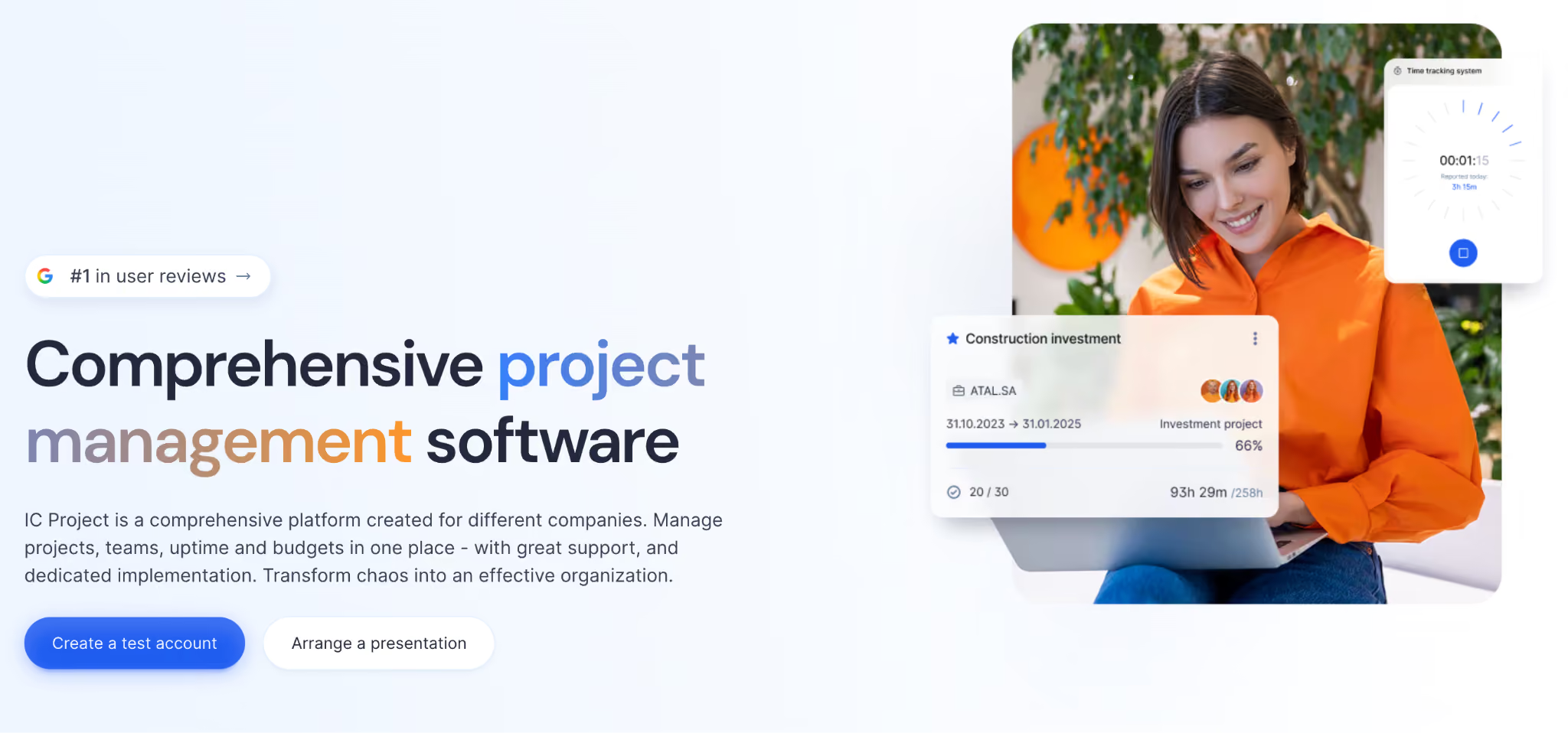
IC Project isn’t just another tool—its features are built to support real, everyday teamwork and make collaborative efforts more effective and productive. At its core, it helps teams see what needs to be done, communicate clearly, and stay aligned without chaos.
A shared workspace that supports collaboration
Instead of switching between apps for tasks, files, schedules, and discussions, IC Project unites everything in one place. Tasks, projects, and team communication live together in a shared environment, so both teamwork and decision-making happen in context rather than scattered across inboxes or chats. This clarity helps people focus on progress rather than tracking down information.
Clear tasks and visible progress
When everyone can see what’s assigned, what’s next, and what’s already done, it’s easier to coordinate and improve collaboration. Leaders can delegate tasks clearly and teams can track milestones together, which means fewer misunderstandings and quicker responses when work changes.
Built-in communication that keeps work moving
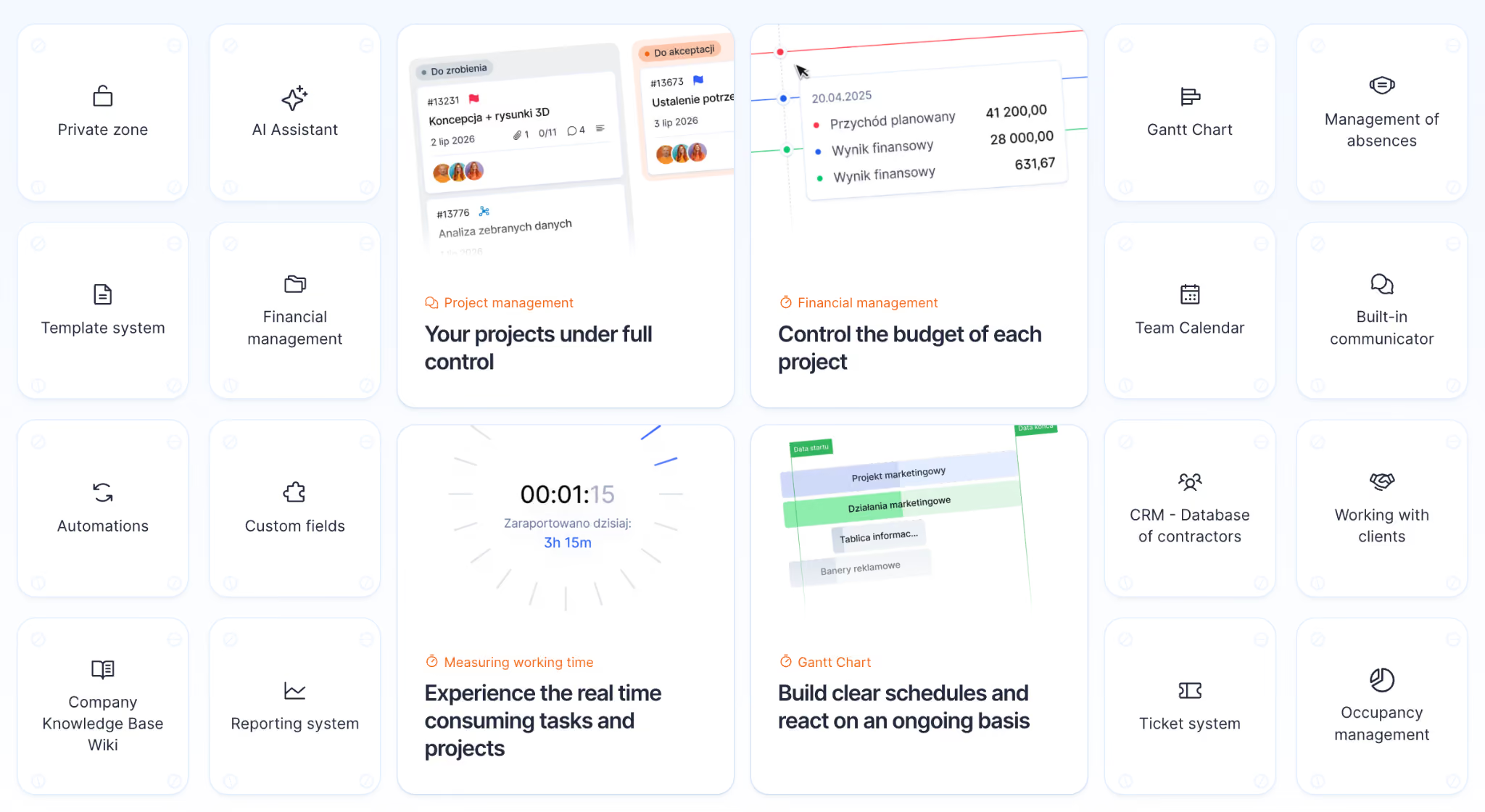
Rather than discussing work in separate chat tools or long email threads, IC Project lets people talk directly where the work happens—inside tasks, on project boards, or in calendars. This keeps questions, clarifications, and updates tied to specific work, helping teams share new ideas and solve problems faster without losing context. It also strengthens broader soft skills like communication and coordination simply by bringing them into daily use.
Support for planning, feedback, and alignment
IC Project also includes tools for templates, visual schedules, and reporting, which help teams plan ahead and react when things change. By keeping everyone looking at the same information and timelines, it reduces surprises and ensures teams stay aligned. When collaboration feels organized rather than messy, people can contribute confidently and the whole group works more effectively.
In everyday work, IC Project helps teams work more effectively, reduce friction in collaborative efforts, and make collaboration a natural part of the process rather than something extra.
Real team examples: collaboration wins & losses
Scenario 1: Choosing the right tool avoids workflow bottlenecks
When a finance team adopted an AP automation solution as a replacement for Stampli alternatives like Rillion or Sage Intacct, the entire department saw smoother approvals and fewer late payments. By comparing tools before committing — including options with different strengths in integration and workflow features — they avoided spending months fixing misaligned processes that once slowed approval cycles.
Scenario 2: Unexpected pricing changes slow teams down
A developer team that relied on an AI-enabled code editor like Cursor faced a productivity slump when the company shifted from fixed usage limits to usage-based pricing. Because team members suddenly hit credit caps faster than expected, collaboration and debugging slowed as people paused work to manage costs and limits. Knowing the Cursor pricing structure upfront helps teams plan workloads and budget their tools without breaking productivity.
Scenario 3: Nonprofit software selection boosts mission impact
A small nonprofit struggling with manual donor tracking and financial reconciliation switched to a purpose-built nonprofit software platform that combined CRM, reporting, and accounting workflows. Instead of juggling spreadsheets and multiple apps, the team shared a single system, which improved their collaborative efforts and freed up time for program work. The clear workflows and shared dashboards helped reduce errors and support better decision-making across offices. (Nonprofit-focused platforms often include built-in compliance, donor reporting, and budgeting tools tailored to fund accounting.)
Collaboration isn’t the problem; alignment is
Collaboration doesn’t slow teams down. Fragmented collaboration does. When people struggle with unclear roles, scattered conversations, and siloed information, productivity slips and frustration rises. Effective teamwork happens when the right tools and practices create alignment early, so teams spend less time fixing misunderstandings and more time moving forward.
That’s where IC Project makes a real difference. By bringing tasks, deadlines, discussions, and progress into a single collaborative workspace, it helps teams stay coordinated and focused. Everyone knows what to do, when to do it, and who is responsible, which supports clearer communication, shared understanding, and smoother execution across the board. IC Project embeds collaboration into the daily flow of work, helping teams work more effectively together and avoid the common productivity traps that come with poor coordination.
See more:
Also read
.png)
Update 08/2026: Discover the latest features
August update for IC Project: task-level finances, time tracking controls, and customizable notifications. Discover the latest features.


Try IC Project in your company
Our team is ready to help!

Create a free account and test with no obligation