
SWOT analysis - definition, examples, and application
Learn how SWOT analysis helps identify strengths, weaknesses, opportunities, and threats to support better strategic decisions and action planning.

Tell our team about your needs and we will customize the tool as part of your chosen package!
A SWOT analysis helps organize what’s working, what’s getting in the way, and which external conditions could help or hurt. Its value doesn’t come from making a list of points, but from choosing a handful of priorities and turning them into action. That makes it easier to assess the situation of an organization, project, or product before an important decision. In practice, this tool works best when you need to quickly gather the facts, build a shared view of the situation, and set a direction.
What is a SWOT analysis and what is it used for?
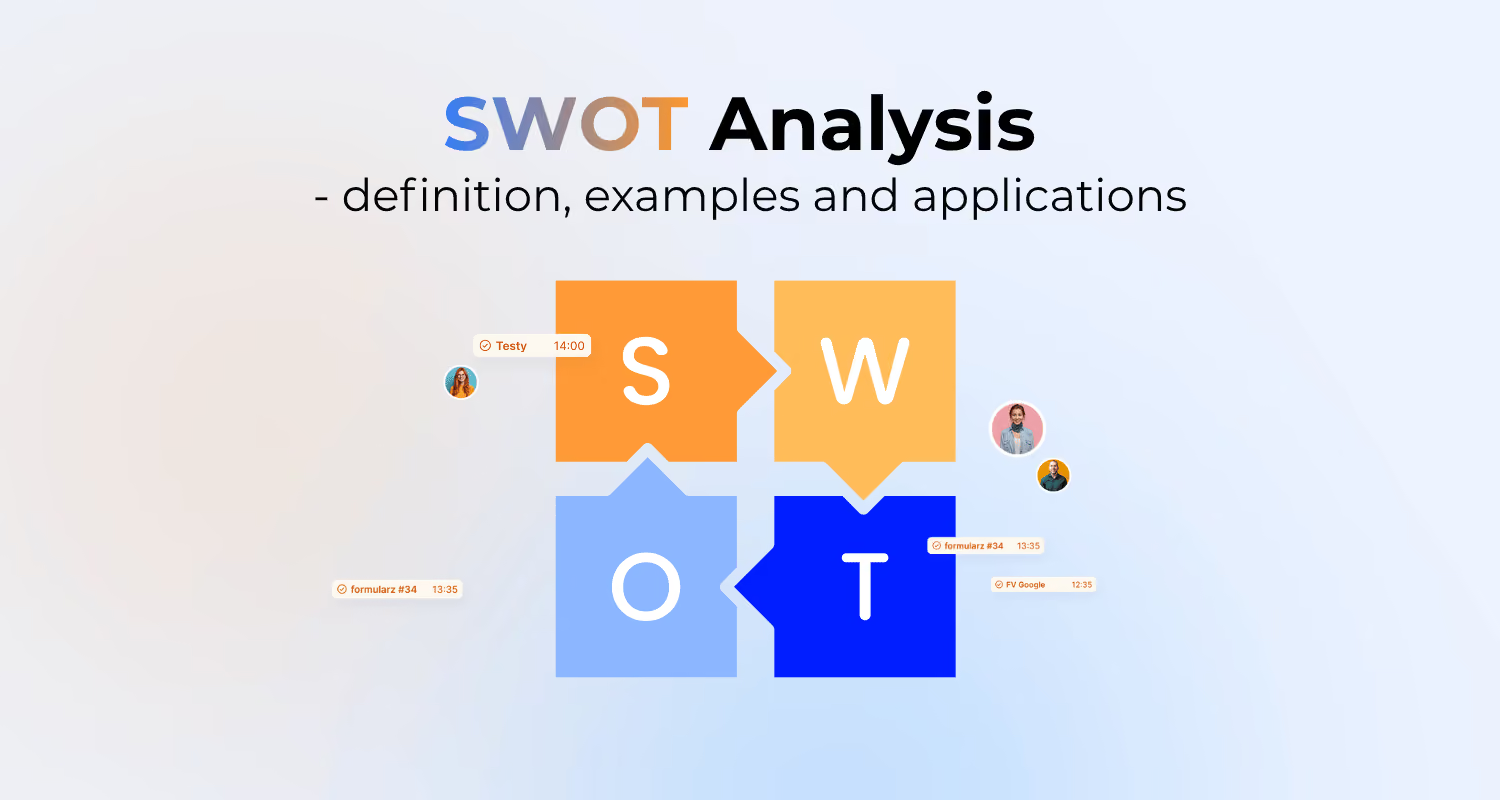
A SWOT analysis is a strategic planning tool that organizes internal strengths and weaknesses alongside external opportunities and threats. This split helps separate issues the team can influence from market conditions it can’t control. That matters, because the fix for internal process problems will be different from the response to price pressure or new competitors. A well-done analysis gives everyone a shared picture of the situation instead of a collection of loose opinions.
SWOT is used at the start of a new initiative, during quarterly or annual planning, and after a major market shift. It’s also useful when key metrics start falling and you need to figure out where the problem is coming from. In project management, it supports risk assessment and helps choose the right approach, for example between Agile and Waterfall. In marketing and workflow optimization, it helps assess brand position, a campaign, process delays, and automation potential.
Simply filling in four boxes isn’t enough if it doesn’t lead to an action plan. A practical SWOT outcome should end with a short list of priorities, owners, and deadlines. The tool is qualitative, so it doesn’t replace financial analysis, scheduling, or resource planning.
What are the key elements of a SWOT analysis?
The key elements of a SWOT analysis are four groups of factors: strengths, weaknesses, opportunities, and threats. Strengths and weaknesses describe the inside of an organization, project, or product. Opportunities and threats relate to the external environment — the market, competition, regulations, technology, or suppliers. This distinction helps prevent a common mistake: mixing internal issues with external ones.
- Strengths — unique capabilities, a strong brand, efficient processes, or access to resources,
- Weaknesses — skill gaps, technical debt, bottlenecks, and low profitability,
- Opportunities — new technologies, legal changes, market trends, or weaker competition,
- Threats — new competitors, price pressure, negative market changes, and supplier instability.
Every point should be grounded in facts, not just in how workshop participants feel. The best foundation is data from CRM and ERP systems, customer feedback, financial reports, process audits, and the risk register. The more specific the entries are, the easier it is to choose actions and prioritize them later. Vague statements like “we have good quality” or “the market is difficult” don’t do much to support decision-making.
How do you run a SWOT analysis step by step?
The SWOT analysis process starts with clearly defining the goal and scope. You need to decide whether you’re analyzing the whole organization, a single project, a product, or a specific process. That changes the data you need, the makeup of the team, and the level of detail in the conclusions. If the scope is too broad, you end up with a long list of points that has little decision-making value.
- define the goal and boundaries of the analysis,
- bring together the team and collect data from systems, reports, and feedback,
- list factors in the four boxes during a facilitated brainstorming session,
- separate facts from opinions and combine similar points,
- move on to TOWS strategy and choose 3–5 priorities with owners and deadlines.
Once you’ve gathered the material, you need to turn it into decisions instead of leaving it as a table. At this stage, the TOWS matrix helps by connecting the factors and showing a few logical courses of action. You match strengths with opportunities, protect advantages against threats, or look for ways to reduce weaknesses. If the analysis doesn’t end with an action plan, it’s just an organized set of notes.
What roles do team members play in a SWOT analysis?
A SWOT analysis needs three roles: a facilitator, subject matter experts, and a decision-maker or sponsor. The facilitator runs the process, keeps an eye on time, and makes sure the team doesn’t mix facts with opinions. They structure the discussion, clarify points that are too vague, and stop the group from drifting into side topics. Without this role, the workshop can easily turn into a chaotic debate.
Subject matter experts bring data, context, and practical knowledge about the market, process, or project. Thanks to them, strengths and weaknesses aren’t guesses, but a description of the real situation. Ideally, they should represent the areas that genuinely affect the outcome of the analysis.
The decision-maker or sponsor sets priorities and approves the resources needed to act on the findings. Without someone who will actually make decisions after the workshop, even an accurate analysis changes nothing in practice. A typical mistake is inviting lots of participants without a clear split of responsibilities. Then you end up with plenty of observations, but no plan with owners and deadlines.
How can you use SWOT analysis in marketing and project management?
SWOT analysis in marketing and project management is used to set priorities before making an important decision. In marketing, it helps assess a brand’s position, a campaign plan, a content marketing strategy, and a move into a new market or channel. In projects, it supports choosing an approach, analyzing risk at kickoff, and carrying out a strategic review during delivery. That way, the team can clearly see which issues are internal and which come from the external environment.
- in marketing — assessing brand strength against market trends,
- in marketing — checking whether a campaign is built on real strengths,
- in marketing — auditing a content marketing strategy before changing direction,
- in projects — comparing the conditions for Agile and Waterfall,
- in projects — organizing risks before launching an initiative,
- in projects — reviewing the situation when a project is losing momentum or results.
To make the analysis useful, you need to narrow the scope to one specific goal. In marketing, that could be a particular campaign or channel. In a project, it could mean choosing a methodology or assessing the situation at a given stage. If the scope is too broad, you end up with a long table but no decision.
The biggest value shows up when the findings are turned into a TOWS action matrix. A strong brand combined with a favorable trend can point to the right direction for marketing activities. On the other hand, a project’s weaknesses paired with threats show where caution and fast action are needed. The outcome should be a handful of priorities with owners and deadlines — not just a description of the situation.
When might SWOT analysis not be enough?
SWOT analysis isn’t enough when you need to calculate profitability, map out a schedule, or plan resources. It’s a qualitative tool, so it helps structure the assessment of a situation, but it doesn’t replace numbers or detailed planning. On its own, it won’t answer questions about ROI, NPV, or a realistic project delivery date. That’s why it works best as a diagnostic step, not as the only decision-making tool.
In practice, this limitation is especially clear in large initiatives. A list of strengths, weaknesses, opportunities, and threats alone won’t show how many resources are needed or which option makes better financial sense. It also won’t tell you whether the organization can realistically carry the plan through on time. SWOT helps set direction, but it doesn’t replace an execution plan.
An analysis based mainly on opinions will also fall short. If the points are too general, internal and external factors get mixed up, or nothing is prioritized, the result quickly loses value. At that point, the team feels like it completed the workshop but still has no idea what to do next. That’s often the moment when you need to go back to the data and tighten up the conclusions.
SWOT also isn’t enough when it stops at the table and never turns into action. If it isn’t translated into priorities, owners, and deadlines, the analysis won’t affect project outcomes or marketing performance. That’s why the diagnostic part has to be followed by a decision and a plan. Only then can you judge whether the analysis actually improved the metrics.
What are the most common mistakes made during SWOT analysis?
The most common mistakes are basing the analysis on opinions, making the points too vague, confusing internal factors with external ones, and failing to set priorities. When that happens, the table may look reasonable, but it doesn’t lead to a decision. If the team fills it with phrases that aren’t backed by data, it’s hard to tell what’s truly an advantage and what’s just a belief. Mixing categories causes the same problem, because then the organization tries to fix the market instead of its own processes.
- nothing but opinions, with no reference to data from systems, reports, or feedback,
- points that are too broad, such as “weak marketing” or “strong brand,”
- putting a market trend under weaknesses or a process issue under threats,
- treating every point as equally important,
- ending the work at the table stage, with no owners, deadlines, or decisions.
You can reduce these mistakes with some basic discipline in how the work is done. Each point should be written in a way that makes it clear where it comes from and what it changes in practice. If the workshop doesn’t produce 3–5 priorities, the analysis hasn’t done its job. At the end, you need to remove duplicates, assign weight to the most important factors, and turn them into actions in the TOWS matrix.
See more:
PEST analysis - definition, examples, and application
Elements of business strategy - definition, examples, and application
Also read

Update 09/2026: Even more accurate project planning
September IC Project update: set project duration in days and exclude non-working days from schedules. Plan projects faster and more accurately.
.png)
.png)

Try IC Project in your company
Our team is ready to help!

Create a free account and test with no obligation